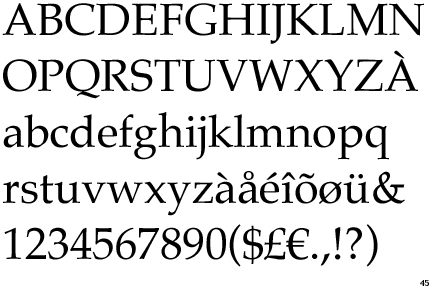
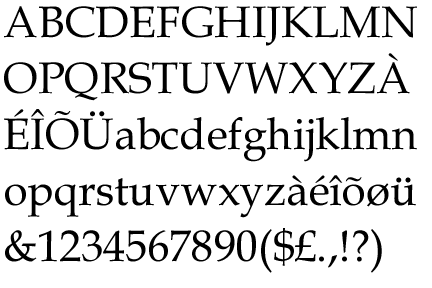
Reuters’ Jessica Dye is reporting that attorney Frank Martinez, who previously sued NBC in 2009 for “no less than $2 million” and then again just a few weeks ago for $1.5 million over alleged typeface/font licensing violations, is now filing a lawsuit of “at least $2 million in damages” on behalf of Typotheque VOF, which is a Dutch type foundry. The suit is being filed against a consulting company which designed Rick Santorum’s Website and the designer is being accused of “illegally using its trademarked font” by Typotheque VOF. The suit also claims that an “unauthorized derivative version” (my emphasis) was used on the Website.
Similar to the $1.5 million Harry Potter font lawsuit from a few weeks ago, this one should be worth watching because of the use of so many typefaces in our technology-driven culture. The Harry Potter suit appeared to focus primarily on licensing and the use of the software; this Santorum suit seems to be both license issues as well as alleged trademark infringement. The part that I’m curious about in this one is the “derivative version” part, since it doesn’t say if this means something like a sans-serif version of the typeface in question (FEDRA) or if it means a completely different font that looks similar. If the latter is the case, we’ve already seen in other instances that typefaces can look similar in the United States but they can’t share trademarked names.
To follow any updates on the stories, I’ll try to make a link to Google News. This should update automatically just by clicking it.
Similar to the $1.5 million Harry Potter font lawsuit from a few weeks ago, this one should be worth watching because of the use of so many typefaces in our technology-driven culture. The Harry Potter suit appeared to focus primarily on licensing and the use of the software; this Santorum suit seems to be both license issues as well as alleged trademark infringement. The part that I’m curious about in this one is the “derivative version” part, since it doesn’t say if this means something like a sans-serif version of the typeface in question (FEDRA) or if it means a completely different font that looks similar. If the latter is the case, we’ve already seen in other instances that typefaces can look similar in the United States but they can’t share trademarked names.
To follow any updates on the stories, I’ll try to make a link to Google News. This should update automatically just by clicking it.
Font Lawsuit
UPDATE 9/3/2011
The PDF version of this suit’s complaint suggests that this might be a little different from the Harry Potter and 2009 NBC suits in that this suit appears to claim that the defendant, RaiseDigital LLC, was using the Fedra font without license by utilizing a “calling for” feature in which one Website contacts a separate server to make a typeface appear on the screen without the viewer having to have that particular typeface installed on their computer.
According to the complaint:
As an example, Blogger currently uses this feature to allow fonts like Allerta, Arimo, Arvo, Copse, Gruppo, Josefin Slab, and the IM Fell fonts to appear on blogs even though these fonts might not be found on the viewer’s computer. A person will be able to view the Website in these typefaces even if they don’t have these font files on their computers because the contacted Website contacts another server to access the font file. The viewer can then see the Website in that particular typeface even if the font file doesn’t exist on their own computer for rendering.
The font file was being accessed even though they were not given authorization to do so, which is stated in the complaint, too:
The suit also alleges that other glyphs were added to the FEDRA font software to make an “unauthorized derivative version.” While it will be clear trademark infringement if the extra glyphs are being listed with the trademarked name “FEDRA,” I won’t be surprised to see this particular point questioned by the judge. The glyphs themselves won’t be a point of contention but the use of the FEDRA name will—or rather, should be. Making letters which look similar to other typefaces’ letters is not a crime but attaching them to a trademarked name and using that name is.
Archive.org offers a listing of updates on the case here.
According to the complaint:
Upon information and belief, Defendant converted or caused a third party to convert Plaintiff’s FEDRA Font Software into a format suitable for use as a “Webfont” using the CSS @font-face call, a programming method used to dynamically call for the serving of font software from a remote server to a viewer’s computer when the viewer has opened a website, in this case, the website known as: www.ricksantorum.com. A showing of the CSS coding “calling” for the downloading and use of unauthorized versions of Plaintiff’s Font Software as a webfont is shown in Exhibit D.
As an example, Blogger currently uses this feature to allow fonts like Allerta, Arimo, Arvo, Copse, Gruppo, Josefin Slab, and the IM Fell fonts to appear on blogs even though these fonts might not be found on the viewer’s computer. A person will be able to view the Website in these typefaces even if they don’t have these font files on their computers because the contacted Website contacts another server to access the font file. The viewer can then see the Website in that particular typeface even if the font file doesn’t exist on their own computer for rendering.
The font file was being accessed even though they were not given authorization to do so, which is stated in the complaint, too:
At the time of the alleged infringements, Plaintiff had not converted the FEDRA Font Software for use as a webfont.
The suit also alleges that other glyphs were added to the FEDRA font software to make an “unauthorized derivative version.” While it will be clear trademark infringement if the extra glyphs are being listed with the trademarked name “FEDRA,” I won’t be surprised to see this particular point questioned by the judge. The glyphs themselves won’t be a point of contention but the use of the FEDRA name will—or rather, should be. Making letters which look similar to other typefaces’ letters is not a crime but attaching them to a trademarked name and using that name is.
Archive.org offers a listing of updates on the case here.